
"coffee plant cultivation"
10000 article(s) found

The planting of coffee trees
When tasting a single cup of coffee, you will see some information about the variety in addition to the country, region and geographical and climatic conditions. Such as Arabica, Robusta, Bourbon and so on.
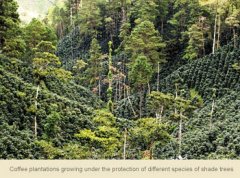
Guatemala Coffee planting Environment Guatemala Coffee cultivation
Faced with severe landscape changes and shrinking habitats, more than 90 species of migratory birds have found refuge in shaded trees. In early autumn (north temperate zone), birds such as Nashville warbler (Vermivoraruficapilla), wide-winged eagle (Buteo swordfish), crested flycatcher (Myiarchuscrinitus), lovely summer Donna Finch (Piranga bayberry), Raptors and others frequently shadow coffee.
History of Coffee Tree planting
In China, according to historical records, coffee trees were planted in Taiwan for the first time in 1884, and coffee cultivation in mainland China began in Yunnan. In 1902, a French missionary named Tian introduced seeds from Yingong, Binchuan County, Yunnan Province. it was successfully planted in a place called Zhu Kula, a tributary of the Jinsha River. The commercial cultivation of coffee in Yunnan began in 1985.

General knowledge of Coffee planting Environmental requirements for the cultivation of small Coffee in Yunnan
Small seed coffee is native to the lower part of the Ethiopian rainforest in northern Africa. The temperature is relatively low, with an average annual temperature of 20 degrees. The origin of medium-grain coffee is near the equator. Therefore, small seed coffee has stronger cold tolerance and wider adaptability than medium grain coffee. Medium-grain coffee requires a slightly higher temperature. First, the requirement for temperature should be based on the natural conditions of Yunnan, and the suitable planting area of coffee should be selected.
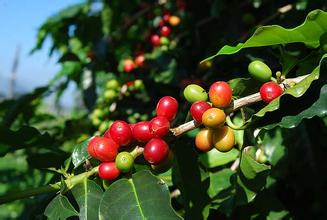
Coffee Knowledge Points: Detailed Analysis of Knowledge Points about Coffee Cultivation
I. Planting time: April 15 - 25. II. Planting location: plain, hillside, wasteland, house in front of house, forest fruit tree seedlings can be planted, but it is not suitable to plant in tall trees or other unventilated places. Third, herbal coffee does not like water and fertilizer, conditional planting can use farm manure, during the growth period in case of drought irrigation 1-2 times the best, absolutely do not allow the use of various fertilizers and

What are the varieties of iron pickup coffee cultivated in Typica
Following Cafe (Wechat official account vdailycom) found that the Beautiful Cafe opened a small shop of its own. Ypica Typica is a tall cultivated variety of Arabica species, derived from Yemen to Java, which began to spread in Java in the early 18th century. All Arabica, the oldest native variety in Ethiopia, are derived from Tibica. The top leaf of Tiebika is bronzed and has a bean body.

A brief introduction to the planting Market Price of Taiwan's Alishan Mar Coffee varieties without bitterness and astringency
I was surprised by the performance of this sun-dried bean. At first, it smelled dry and slightly fermented, but at the entrance, it suddenly turned into a clean, rich, multi-layered fruit with sweet and sour taste, without a hint of indecent taste. It was amazing. I was surprised that Taiwan could make such a great sun bean. Former chairman of the Fine Coffee Association of America and former Counter C.
Requirements for Inspection and Quarantine record of Coffee planting Base (Yunnan)
1. Base basic conditions and requirements 1.1 continuous and have a certain scale, the area should not be less than 100 mu. 1.2 there shall be a natural or artificial effective isolation zone around the base. 1.3 No pollution sources around the base, such as chemical plants, paper mills, professional feeding
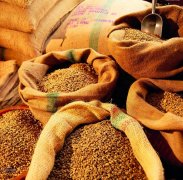
The knowledge of coffee botany is mainly divided into the following five varieties
According to the botanical description of coffee: coffee is Rubiaceae, coffee genus, perennial evergreen shrubs or small trees. There are more than 60 types of coffee classified, but there are roughly two varieties of coffee grown commercially on a large scale, one is Arabica, accounting for about 70 percent of the world's coffee planting area, and the other is Robasta, accounting for about 30 percent of the world's coffee planting area. According to our country

Coffee evaluation? Industry: guiding cultivation is more important
Exchange of professional baristas Please pay attention to the coffee workshop (Wechat official account cafe_style) Taiwan's coffee planting model is not like the large area of foreign manor beans, mostly small coffee farmers,-Yunlin Gukeng Township Office will soon hold a pre-competition workshop on coffee bean evaluation, hoping to make Gukeng coffee achieve good results. However, some people in the industry believe that in order to improve the quality of coffee in Taiwan, it is more necessary to guide coffee.

A brief introduction to the cultivation of spicy and unrestrained boutique coffee beans in Kenya, geographical location, climate and altitude
Coffee cultivation in Kenya is mainly divided into two types: large farms (Estate) and cooperatives (Cooperatives). The former generally has a large planting area and has independent coffee processing facilities. Most coffee production is done by a large number of small farmers, who form coffee cooperatives. The Coffee Cooperative Society hired special managers to supervise the coffee handling of its members.

Introduction to the Origin of Coffee in Yunnan small Coffee Plantation
Yunnan's high-quality geographical and climatic conditions provide good conditions for the growth of small-grain coffee. The planting areas are Lincang, Baoshan, Simao, Xishuangbanna, Dehong and other prefectures. Dehong Hougu Coffee Co., Ltd. is better. Small-grain coffee in the Science and Technology Museum, No. 1 Cuihu West Road, Kunming, Yunnan Province, is suitable for growing in the mountains at an altitude of 800 to 1800 meters. If the elevation is too high, it will taste sour, and if it is too low, it will taste bitter.

The whole process of coffee bean cultivation and growth Coffee tree cultivation
Common questions about coffee bean cultivation: First, what is coffee seed? How are coffee seeds obtained? Coffee seeds, commonly known as coffee with shell dry beans, are coffee seeds that have not been removed from the mesocarp and silver skin. Coffee seeds are divided into Arabica seeds and Robusta seeds. The picture shows coffee green beans available for consumption. They are also two major commercial large-scale cultivation.

Introduction to the cultivation of Coffee in the Lemon Tree Manor of Nicaragua in Central America
Java is still cultivated in Java at present, but because of its low yield and poor disease resistance, many farms have changed to new varieties. From the appearance, the traditional Java bean type is quite similar to Typica species, generally seen Java bean type is short and slender (that is, short berry-shaped), while long grain (long berry) Java species is even more rare. In addition to the rarity of variety and appearance

History of introduction and expansion of Coffee in early China (5)
1. From the first peak period of the development of China's coffee industry (1952-1961) to the late 1940s, according to recorded figures, there are 2173.33 hectares of rubber plantations in Hainan Island, with a total of 867600 rubber trees, with an annual output of 199,000 tons of dry rubber, and more than 300,000 coffee plants. the annual output of coffee beans is 1 ton. According to a survey in the early 1950s, there was a large amount of coffee left in Fushan area of Chengmai County, with a total of 70,000.

A brief introduction to the planting market price of excellent tin card boutique coffee bean varieties
Bourbon: this variety is derived from the iron pickup and was expanded by the French in 1708 on the island of Bourbon (now known as Reunion). Bobang also has a beautiful aroma and rich taste, higher yield and growth than iron pickup, suitable for planting in an area of 12002000 meters, but less resistant to diseases and pests, and more sensitive to strong winds and heavy precipitation. Wave

General knowledge of Fine Coffee cultivation of small Coffee in Yunnan
The origin of Yunnan small-grain coffee: in 1892, the French preacher Father Tian succeeded in experimenting with growing coffee in a place called Zhu Kula in Yunnan. To the city of Guzhu Kula, there are still 24 coffee trees with more than 90 years old. Zhu Kula is a mysterious, colorful and natural village, attached to the Zhukula Village Committee, Pingdi Town, Binchuan County, Dali Prefecture, located in the trunk of the Jinsha River.

Introduction to the flavor of Colombian coffee and the cultivation of Colombian coffee varieties
The early varieties planted in Colombia were the old iron pickup and bourbon, which were replaced by Kaddura in 1970; Kaddura is not only more productive per plant than iron pickup and bourbon, but also can be planted more per unit of acreage because the tree is more compact. In 1961, CENICAFE began to study the Timor variety of Robusta blood, and then selected Timor and Caturra.

Cultivating "Coffee Mother Tree" in Holland to achieve Coffee Prosperity
About 16 ⊙○ years ago, the Indian Babudan was infatuated with Middle Eastern coffee and hid seven Yemeni mocha seeds in a hidden bag on his belly to avoid the eyes and ears of Turkish soldiers. After returning to India, he planted coffee beans on Mount Chandragiri Hills in the southwestern state of Kanlataka, outside Babudan's spiritual cave. Due to the climate

On the History of Coffee in China
According to historical records, coffee trees were first planted in Taiwan in 1884, and coffee cultivation in mainland China began in Yunnan. In 1902, a French missionary named Tian introduced seeds from Yinggong County in Binchuan County, Yunnan Province. it was successfully planted in a place called Zhu Kula, which is located on the bank of the Yushan River, a tributary of the Jinsha River. The commercial cultivation of coffee in Yunnan began in 1985, but its development is slow.